
Introduction
Cosmos are popular flowering plants known for their delicate foliage, cheerful daisy-like flowers, and ability to bring color to gardens with relatively simple care. They are suitable for garden beds, borders, containers, balconies, and informal flower patches. One of the most important steps in growing healthy cosmos is choosing the right planting time. Understanding when to plant cosmos seeds can help gardeners give young plants the warmth, sunlight, moisture, and growing conditions they need to establish successfully.
Cosmos generally prefer warm growing conditions and are sensitive to frost when they are young. The best planting period therefore depends on the local climate rather than one universal calendar date. Gardeners in warm regions may have a longer planting window, while those in cooler areas generally need to wait until the danger of frost has passed. By considering temperature, sunlight, soil condition, and seasonal weather, gardeners can select a suitable time for sowing and enjoy a longer flowering period.
Understanding Cosmos Seeds
Cosmos seeds are relatively easy to handle and can be sown directly into prepared garden soil. They are often preferred by beginners because cosmos can grow successfully without an elaborate planting process when basic conditions are suitable. Once the seeds receive adequate warmth and moisture, they can germinate and develop into young seedlings.
Before deciding when to plant cosmos seeds, it is useful to understand the plant’s basic growth requirements. Cosmos generally perform well in full sun and reasonably well-drained soil. They do not usually require extremely rich soil, and excessive fertility can encourage leafy growth at the expense of flowers. Good sunlight and moderate watering are usually more important than creating an overly fertile planting bed.
When to Plant Cosmos Seeds
The best time to plant cosmos seeds depends mainly on temperature and frost conditions. In areas with cold winters, seeds are generally sown outdoors after the final frost has passed and the soil has begun to warm. Planting too early can expose young seedlings to cold conditions that may slow germination or damage tender growth.
In warmer climates, gardeners may have more flexibility because severe frost may not be a concern. Cosmos can often be grown during suitable warm seasons, although extremely hot weather can also affect flowering and plant development.
For gardeners asking when to plant cosmos seeds, the simplest rule is to wait for reliably warm conditions and avoid periods when frost is still likely. Local seasonal patterns are more useful than following a single planting date intended for every region.
Best Temperature for Germination
Temperature has a major influence on seed germination. Cosmos seeds germinate more reliably when the soil is warm enough to support active growth. Cold soil can delay germination and may leave seeds vulnerable to excessive moisture.
Gardeners should therefore avoid sowing during unusually cold periods. Waiting until temperatures become consistently suitable can produce more dependable results than planting as early as possible.
In areas with distinct seasons, gardeners can monitor local weather and soil conditions before sowing. When the soil feels reasonably warm and the weather has settled into a suitable growing period, conditions are generally more favorable for cosmos seeds.
Planting Cosmos in Different Climates
Climate plays an important role in determining the planting schedule. In regions with cold winters, spring is usually the most practical season for outdoor sowing. Once the risk of frost has passed, seeds can be planted directly into prepared soil.
In mild climates, cosmos may be grown during a wider portion of the year. Gardeners can choose a period when temperatures are warm but not excessively stressful for young plants.
In hot regions, timing may require additional attention. Very intense summer heat can make establishing seedlings more difficult, especially if water evaporates rapidly from the soil. In such conditions, gardeners may choose a milder part of the growing season.
Understanding local weather patterns is therefore essential when deciding when to plant cosmos seeds.
Choosing the Right Location
Cosmos generally grow best in a location receiving plenty of sunlight. A sunny garden bed can encourage strong stems and abundant flowering. Although the plants can tolerate some less-than-perfect conditions, insufficient sunlight may lead to weaker, taller growth and fewer flowers.
Choose an area where plants will receive several hours of direct sunlight during the day. Good air circulation can also help keep foliage dry and reduce problems associated with excessive humidity.
If growing cosmos in containers, place them somewhere bright and sunny. A balcony, terrace, patio, or sunny window area can work when sufficient light is available.
The planting location should also provide enough space for plants to develop without being crowded by larger plants or structures.
Preparing the Soil
Cosmos are relatively adaptable and do not generally require highly fertile soil. The most important consideration is good drainage. Waterlogged soil can create unfavorable conditions for roots and may interfere with healthy growth.
Before sowing, loosen the soil so that young roots can establish easily. Remove large stones, weeds, and other debris from the planting area. If the soil is extremely compacted, incorporating suitable organic material can improve its structure.
Avoid excessive fertilizer, particularly high-nitrogen fertilizer. Too much nitrogen can encourage abundant green growth while reducing the emphasis on flowers.
A simple, well-drained growing medium is often sufficient for cosmos.
How to Plant Cosmos Seeds
Cosmos seeds can be sown directly into the garden once conditions are appropriate. Prepare the soil surface and create shallow planting areas rather than burying the seeds deeply.
Place the seeds according to the spacing recommended for the variety being grown. Cover them lightly with soil and water gently so that the seeds remain in place.
The soil should remain moderately moist during germination, but it should not become saturated. Checking the planting area regularly helps ensure that newly sown seeds do not dry out.
Once seedlings emerge, allow them enough space to grow. If too many seedlings develop close together, thinning can reduce competition for sunlight, water, nutrients, and air circulation.
Direct Sowing Versus Starting Indoors
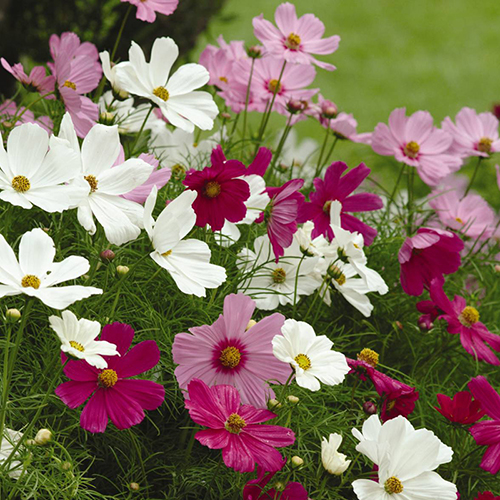
Gardeners have two common options for starting cosmos: direct sowing outdoors or starting seeds indoors before transplanting. Direct sowing is simple and avoids the need to move young plants later.
Starting seeds indoors can be useful in climates with a short growing season because it allows plants to establish before outdoor conditions become ideal. However, young cosmos can be sensitive to root disturbance, so transplantation should be performed carefully.
For many gardeners, direct sowing after the risk of frost has passed is a straightforward approach. The choice depends on climate, available space, and personal gardening preferences.
Watering After Planting
Watering is particularly important while seeds are germinating and seedlings are becoming established. The soil should remain consistently moist enough to support germination without becoming waterlogged.
Frequent light checks are more useful than following a rigid watering schedule because weather conditions can change quickly. Warm, dry weather may require more frequent watering, while rainy conditions may require little additional moisture.
Once cosmos plants are established, they generally tolerate relatively dry conditions better than very wet soil. Deep but appropriate watering can encourage stronger root development.
Avoid continuously soaking the planting area, as excessive moisture can create unhealthy growing conditions.
Sunlight Requirements
Sunlight is one of the most important factors affecting cosmos flowering. These plants generally prefer a sunny position where they can receive substantial direct light during the day.
If cosmos are planted in deep shade, plants may become tall and weak as they stretch toward available light. Flower production can also be reduced.
When deciding when to plant cosmos seeds, gardeners should think about sunlight as well as temperature. A planting date may be technically suitable, but if surrounding trees or structures create excessive shade during that season, the plants may not perform as expected.
Choose the brightest practical location available for the best chance of strong growth and flowering.
How Long Do Cosmos Take to Grow?
Cosmos typically develop relatively quickly under suitable conditions. Germination can occur within a couple of weeks, although the exact timing depends on temperature, moisture, seed quality, and growing conditions.
After germination, seedlings gradually develop stems and foliage before eventually producing flower buds. Flowering time varies by variety and environmental conditions.
Warm weather, adequate sunlight, and appropriate moisture can support faster development. Cold conditions, insufficient light, or excessive moisture may slow growth.
Gardeners should therefore avoid judging their plants too quickly. Slight differences in germination and flowering are normal.
When Do Cosmos Bloom?
Cosmos commonly begin flowering several weeks after germination, with exact timing depending on variety and growing conditions. Plants grown in favorable conditions can continue producing flowers over an extended period.
Deadheading spent flowers can encourage continued flowering in many garden situations. Removing faded blooms prevents the plant from putting as much energy into seed production and can help maintain a tidy appearance.
Regularly checking plants also allows gardeners to identify developing buds and monitor their overall health.
If flowering seems delayed, consider whether the plants are receiving enough sunlight or whether excessive fertilizer is encouraging foliage rather than flowers.
Common Problems After Planting
One common problem is planting too early. If seeds are exposed to cold temperatures, germination may be delayed. Young seedlings can also be damaged by frost.
Another issue is overwatering. Cosmos generally prefer reasonably well-drained conditions, so constantly wet soil can create root problems.
Too much fertilizer can also produce excessive foliage. Gardeners sometimes assume that more fertilizer automatically means more flowers, but cosmos can perform well in relatively modest soil conditions.
Insufficient sunlight is another common reason for weak growth. If plants receive too much shade, they may become tall and produce fewer blooms.
Growing Cosmos in Containers
Cosmos can also be grown in containers, making them suitable for patios, balconies, terraces, and small gardens. Choose a container with drainage holes and use a well-draining growing medium.
Container-grown plants may dry out more quickly than those planted in the ground, especially during warm weather. Check the soil regularly and provide water when necessary.
Avoid choosing an excessively large container for a small plant because too much wet soil can remain around the roots after watering. At the same time, the container should provide enough space for the mature plant.
A sunny location is particularly important for container-grown cosmos.
How to Encourage More Flowers
Good sunlight is one of the simplest ways to support flowering. Cosmos generally respond well to bright conditions, while excessive shade can reduce bloom production.
Avoid excessive nitrogen fertilizer because it may encourage leaves and stems rather than flowers. Moderate watering is also important. Once established, cosmos usually do not need constantly wet soil.
Removing faded flowers can help maintain a neat appearance and encourage continued blooming. Regular harvesting of flowers for arrangements can also encourage gardeners to interact with their plants and notice changes in growth.
The overall goal is to provide balanced conditions rather than forcing rapid growth.
Saving Cosmos Seeds
After flowering, cosmos can produce seeds that gardeners may collect for future planting. Allow selected flower heads to mature and dry before collecting seeds.
Choose healthy plants when saving seeds and keep the collected material dry before storage. Properly stored seeds can provide an economical way to grow cosmos in another season.
Seed saving also allows gardeners to become more familiar with the complete life cycle of their plants. Instead of purchasing new seed every season, gardeners can collect mature seed from successful plants and use it during a future suitable planting period.
Seasonal Planting Tips
Seasonal timing should always be adjusted according to local weather. In cooler climates, spring is generally associated with outdoor planting after frost risk decreases. In warmer regions, gardeners may have additional planting opportunities.
When considering when to plant cosmos seeds, focus on three major conditions: suitable warmth, adequate sunlight, and soil that drains properly. These factors are often more important than following a fixed calendar date.
Keep local weather forecasts in mind, particularly if an unexpected cold spell or heat wave is approaching. Waiting for a more stable period can give seeds and young plants a better start.
Conclusion
Knowing when to plant cosmos seeds is an important step toward growing healthy, colorful plants. In general, gardeners should choose a warm growing period and avoid planting outdoors while frost remains a significant risk. The exact timing depends on the local climate, seasonal temperatures, and growing environment.
Cosmos usually perform well in sunny locations with reasonably well-drained soil. They do not require excessively rich soil, and moderate watering is generally preferable to constantly wet conditions. Gardeners can sow seeds directly outdoors or start them indoors when their climate makes that approach useful.
By paying attention to temperature, sunlight, soil, watering, and seasonal conditions, gardeners can create a strong foundation for healthy cosmos growth. With proper care and regular monitoring, these attractive flowers can provide an extended display of color and become an enjoyable addition to gardens and containers alike.


