
Introduction
The question what is cosmos can have more than one answer because the word “cosmos” is used in different areas of knowledge. In astronomy, cosmos refers to the universe and everything that exists within it, including galaxies, stars, planets, space, matter, energy, and the physical laws that govern them. In botany, Cosmos is also the name of a beautiful flowering plant commonly grown in gardens and landscapes. The word itself is connected with ideas of order, harmony, and an organized whole. Because of these different meanings, understanding the term requires looking at its context. Whether someone is asking about the vast universe or the colorful garden flower, cosmos represents something organized, fascinating, and connected to the world around us.
What Is Cosmos in Astronomy?
When people ask what is cosmos in an astronomical context, they are generally referring to the universe as an organized and interconnected whole. The cosmos includes everything that exists physically, from enormous galaxies containing billions of stars to tiny particles that make up matter.
The observable universe contains an immense number of galaxies, and each galaxy can contain millions, billions, or even trillions of stars. Our own galaxy, the Milky Way, is home to the Sun and its planetary system. Beyond the Milky Way are countless other galaxies separated by enormous distances.
The concept of the cosmos therefore goes beyond the sky visible from Earth. It includes regions that are extremely distant and objects that cannot be observed without advanced scientific instruments.
Meaning of the Word Cosmos
The word “cosmos” has roots in ancient Greek, where it was associated with order, arrangement, and harmony. This meaning is different from simply describing an empty area of space.
Ancient thinkers used the concept to describe the universe as an organized system rather than a collection of unrelated objects. Over time, the word became closely associated with the universe itself.
This historical meaning helps explain why the term remains popular in astronomy and philosophy. The cosmos can be viewed not merely as a physical space but as an interconnected system in which galaxies, stars, planets, matter, energy, and physical forces interact.
The Cosmos and the Universe
The terms “cosmos” and “universe” are often used interchangeably, although they can carry slightly different connotations. Universe generally refers to all known physical reality, while cosmos can emphasize the idea of order and structure within that reality.
Both terms can include galaxies, stars, planets, black holes, nebulae, radiation, dark matter, and other known or theorized components of reality.
When studying what is cosmos, it is useful to understand that scientists generally use “universe” more frequently in technical discussions, while “cosmos” can have a broader scientific, philosophical, or cultural meaning.
The Beginning of the Cosmos
Modern cosmology explains that the observable universe developed from an extremely hot and dense early state. The leading scientific model for this expansion is commonly called the Big Bang.
The Big Bang should not be imagined simply as an explosion occurring at one particular point in empty space. Instead, it describes the expansion of space itself from an early hot and dense condition.
Over enormous periods of time, matter began forming structures that eventually developed into stars, galaxies, planets, and other astronomical objects. The universe continues to expand, and scientists study this expansion to understand its history and future.
Galaxies in the Cosmos
Galaxies are among the most important large-scale structures in the cosmos. A galaxy is a vast gravitationally bound system containing stars, gas, dust, dark matter, and other components.
Galaxies can have different shapes and characteristics. Spiral galaxies have distinctive arms extending from a central region, while elliptical galaxies generally have smoother, rounded structures. Irregular galaxies do not fit neatly into these categories.
The Milky Way is a spiral galaxy. Our solar system is located in one of its spiral arms, far from the center of the galaxy. Studying galaxies helps astronomers understand how cosmic structures form and evolve.
Stars and Their Role in the Cosmos
Stars are enormous objects made primarily of extremely hot plasma. They generate energy through nuclear fusion occurring in their interiors. The Sun is the star at the center of our solar system.
Stars are important because they produce many of the heavier elements found throughout the universe. When massive stars reach the end of their lives, powerful stellar events can distribute elements into surrounding space.
These materials can later become part of new stars, planets, and other astronomical bodies. In this way, stars contribute to the continuing evolution of the cosmos.
Planets and Solar Systems
Planets are another important component of the cosmos. A planetary system consists of a star and the objects gravitationally associated with it, including planets, moons, asteroids, comets, and other smaller bodies.
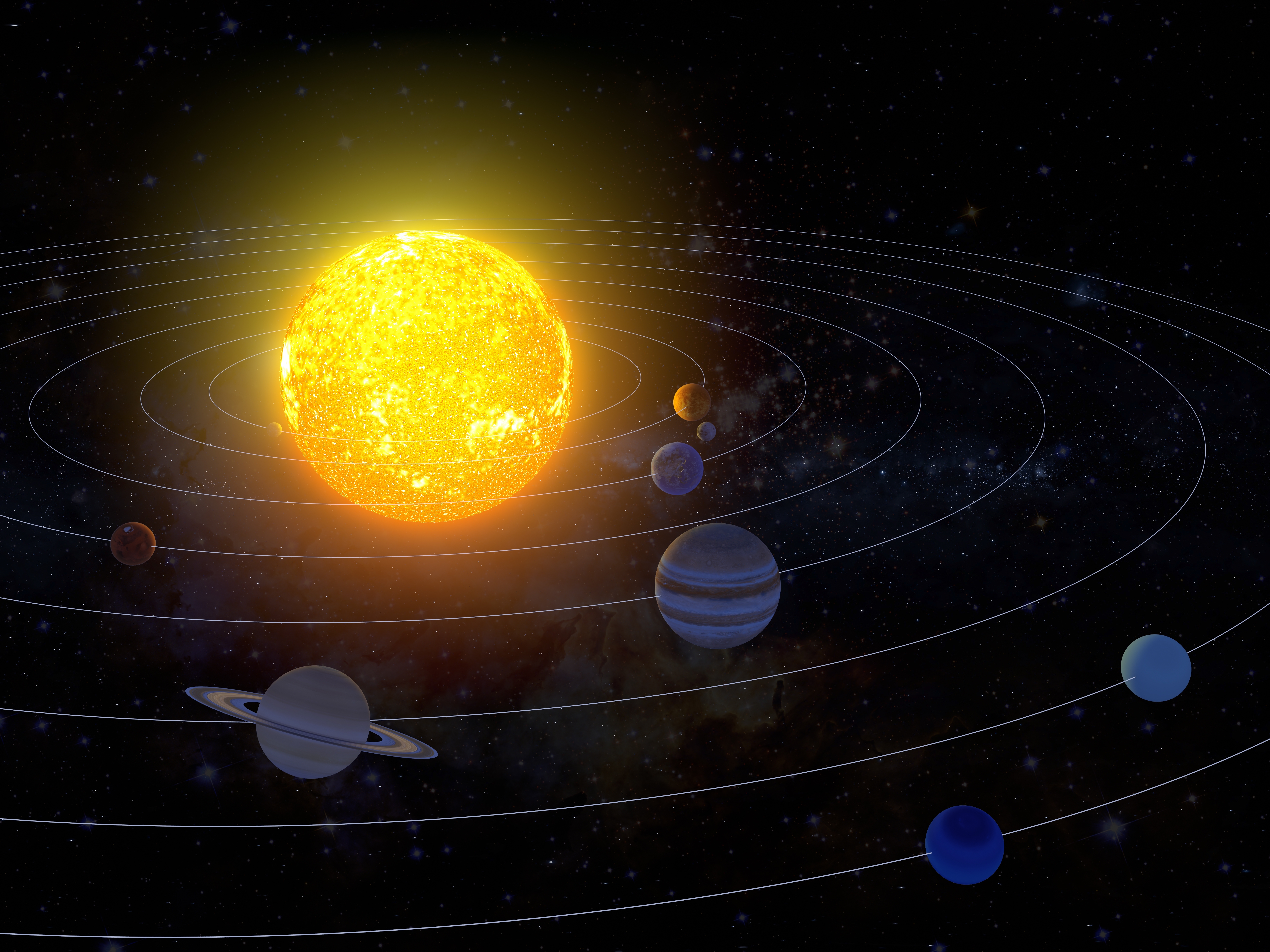
Our solar system contains eight recognized planets orbiting the Sun. These planets have very different characteristics, ranging from rocky worlds such as Earth and Mars to giant planets such as Jupiter and Saturn.
Astronomers have also discovered thousands of planets orbiting stars beyond the Sun. These objects, known as exoplanets, have expanded our understanding of how common planetary systems may be throughout the cosmos.
Black Holes
Black holes are among the most fascinating objects found in the cosmos. They are regions of spacetime where gravity is so strong that, within the event horizon, even light cannot escape.
Black holes can form when massive stars collapse under their own gravity. Supermassive black holes can also exist at the centers of galaxies.
Although black holes cannot be observed directly in the same way as ordinary stars, astronomers can study their effects on nearby matter, radiation, and stars. Observations of gravitational waves and images of material around black holes have provided additional evidence for these extraordinary objects.
Dark Matter and Dark Energy
A major part of modern cosmology involves substances and phenomena that cannot be directly observed in the same way as ordinary matter. Dark matter is believed to interact strongly through gravity but does not emit or reflect light in the usual way.
Dark energy is a term used to describe the phenomenon associated with the accelerated expansion of the universe. Scientists continue to investigate its nature.
These subjects demonstrate how much remains unknown when studying what is cosmos. Although modern astronomy has made extraordinary progress, many fundamental questions about the universe remain open.
What Is Cosmos as a Flower?
The word Cosmos also refers to a group of flowering plants belonging to the genus Cosmos. These plants are popular in gardens because of their colorful flowers, attractive foliage, and relatively easy cultivation.
Cosmos flowers commonly appear in shades such as pink, white, red, orange, and purple, depending on the species and variety. Their delicate petals and feathery leaves make them popular ornamental plants.
They are also valued for attracting pollinators such as bees and butterflies. This makes cosmos flowers useful not only for decorative gardening but also for supporting biodiversity in suitable garden environments.
Popular Cosmos Flower Species
Several Cosmos species are cultivated around the world. Cosmos bipinnatus is widely known for its delicate foliage and daisy-like flowers. Cosmos sulphureus generally produces flowers in warm shades such as yellow, orange, and red.
Different varieties can vary in height, flower size, color, and growth habit. Some are suitable for borders and flower beds, while others work well in containers or informal garden designs.
Gardeners often choose varieties based on local climate, available sunlight, soil conditions, and the desired appearance of the planting area.
Growing Cosmos Flowers
Cosmos plants generally prefer plenty of sunlight and reasonably well-drained soil. They can often grow successfully without extremely rich soil, and excessive fertilizer may encourage leafy growth instead of abundant flowering.
Seeds are commonly sown directly into the garden after the risk of severe frost has passed in cooler climates. In warmer regions, planting times can differ according to local weather patterns.
Regular watering is useful while young plants become established. Once mature, many cosmos varieties can tolerate relatively dry conditions, although prolonged drought can affect growth and flowering.
Cosmos and Pollinators
Cosmos flowers can provide valuable resources for pollinating insects. Their open flower structures make it relatively easy for bees, butterflies, and other insects to reach pollen and nectar.
Growing cosmos alongside other flowering plants can help create a more diverse garden environment. Different flowers bloom at different times, providing food sources for pollinators across a longer season.
For gardeners interested in wildlife-friendly landscapes, cosmos can therefore be a simple addition to a mixed flower garden.
Why Cosmos Is an Interesting Word
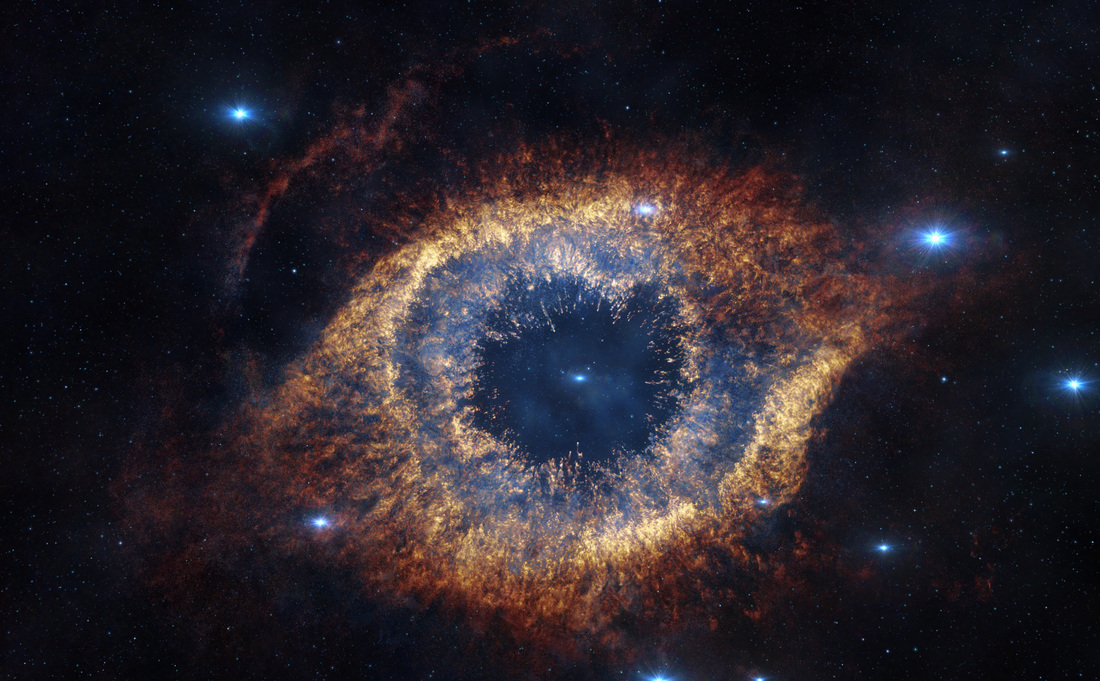
The term cosmos connects two very different subjects: the enormous universe and a delicate flowering plant. At first these meanings may seem unrelated, but both are associated with order, beauty, and natural systems.
The astronomical cosmos represents an immense physical system containing countless objects and structures. The Cosmos plant represents a small part of Earth’s biological environment.
Both meanings encourage curiosity about the natural world. One invites people to look toward distant galaxies, while the other encourages closer observation of flowers, insects, seasons, and plant growth.
How the Two Meanings Are Connected
The connection between the two uses of “cosmos” is primarily linguistic and conceptual. The original meaning of the word was associated with order and harmony, and the flower genus received the name because of the orderly arrangement of its petals.
This makes the word especially interesting in educational contexts. Someone researching what is cosmos may encounter both astronomy and botany depending on the search results or context.
Recognizing the difference between these meanings makes it easier to understand information without confusing the universe with the flowering plant.
Interesting Facts About the Cosmos
The cosmos contains objects of dramatically different sizes. Tiny particles exist alongside planets, stars, galaxies, and enormous cosmic structures.
Light also plays an important role in astronomical observation. Because light requires time to travel, looking at distant objects means looking into the past. The farther away an object is, the older the light reaching Earth can be.
The Cosmos flower has its own interesting characteristics as well. Many varieties grow quickly from seed and can produce abundant flowers during favorable growing conditions.
Why Learning About the Cosmos Matters
Studying the cosmos helps scientists understand fundamental questions about space, time, matter, energy, and the origins of cosmic structures. Astronomical research has also contributed to advances in technology, imaging, computing, communications, and scientific measurement.
Learning about the cosmos can also encourage scientific curiosity. Questions about stars, planets, galaxies, and the origin of the universe inspire people to study physics, mathematics, astronomy, and related fields.
At the same time, learning about Cosmos flowers provides opportunities to understand plant biology, pollination, gardening, and seasonal growth.
Conclusion
So, what is cosmos? The answer depends on the context. In astronomy, the cosmos refers broadly to the universe and its enormous collection of galaxies, stars, planets, black holes, matter, energy, and other structures. It represents the vast physical system that scientists continue to explore.
In botany, Cosmos refers to a group of flowering plants known for colorful, daisy-like blooms and delicate foliage. These plants can add beauty to gardens and provide useful resources for pollinators.
Understanding both meanings makes the word “cosmos” especially fascinating. Whether exploring distant galaxies through a telescope or watching a Cosmos flower bloom in a garden, the term encourages curiosity about the natural world and the remarkable systems that surround us.


