
Introduction
The cosmos represents the vast and fascinating universe that contains everything known to exist, including galaxies, stars, planets, moons, nebulae, black holes, and enormous regions of space. It is difficult to imagine its true scale because the observable universe extends across billions of light-years. When people look at the night sky, they see only a small portion of an environment filled with countless celestial objects and complex physical processes. Scientists study the cosmos to understand how it began, how it has changed over time, and what its future may look like. Modern astronomy combines observations, mathematics, physics, and advanced technology to investigate distant objects that cannot be reached directly. From the movement of planets to the formation of galaxies, almost every part of the universe provides clues about fundamental questions concerning space, time, matter, and energy.
What Does Cosmos Mean?
The word cosmos generally refers to the universe viewed as an organized and interconnected whole. Unlike the simple idea of empty outer space, the cosmos includes all matter, energy, space, and time. Galaxies are distributed throughout enormous regions, while stars form within galaxies and planetary systems can develop around stars. Although these structures appear separate from one another, they are connected by fundamental forces and the underlying laws of physics. Gravity, for example, influences the movement of planets around stars and helps shape the structure of galaxies. Scientists also investigate radiation, magnetic fields, and other physical processes that operate across astronomical distances. Understanding the cosmos therefore requires knowledge from several scientific disciplines, including astronomy, astrophysics, cosmology, and planetary science.
How the Cosmos Began
One of the most important questions in modern science concerns the origin of the universe. The leading scientific model describes an early universe that was extremely hot and dense and has been expanding for billions of years. This expansion is commonly associated with the Big Bang model. It does not describe an explosion occurring at a particular location in existing space; rather, it describes the expansion of space itself from an early hot, dense state.
As the universe expanded and cooled, particles formed and eventually combined into atoms. Over much longer periods, gravity brought matter together to create stars and galaxies. The first stars transformed their surroundings and produced heavier elements through nuclear processes. Later generations of stars incorporated these elements, eventually contributing to the formation of planets and other objects. Studying ancient light and cosmic background radiation allows researchers to investigate conditions from the early history of the universe.
Galaxies Across the Universe
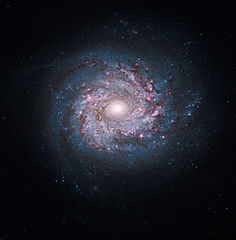
Galaxies are enormous collections of stars, gas, dust, and dark matter held together primarily by gravity. They can have different shapes and structures, including spiral, elliptical, and irregular forms. Our own galaxy, the Milky Way, contains hundreds of billions of stars along with gas clouds, stellar remnants, and planetary systems.
Galaxies are not distributed randomly on small and large scales. They form groups, clusters, and larger structures connected through an enormous cosmic web. Some galaxies interact or merge when their gravitational fields bring them together. These events can change their shapes and influence the formation of new stars. By observing galaxies at different distances, astronomers can also study different stages of cosmic history because light takes time to travel across space.
Stars and Their Life Cycles
Stars are among the most important objects in the cosmos. They form when clouds of gas and dust collapse under gravity. As material becomes concentrated, temperature and pressure increase in the developing stellar core. When conditions become suitable, nuclear fusion begins, releasing enormous amounts of energy.
A star’s future depends heavily on its mass. Stars similar to the Sun can eventually expand into giant stars before shedding their outer layers and leaving behind dense stellar remnants called white dwarfs. More massive stars can undergo dramatic explosions known as supernovae and may leave behind neutron stars or black holes. These processes are important because stars create and distribute many of the heavier elements found throughout the universe. The carbon, oxygen, iron, and other elements present in planets and living organisms ultimately have deep connections to stellar evolution.
Planets and Planetary Systems
The cosmos contains an enormous variety of planetary systems. Our solar system includes the Sun, eight recognized planets, dwarf planets, moons, asteroids, comets, and other smaller bodies. Beyond the solar system, astronomers have identified thousands of confirmed exoplanets orbiting other stars.
These discoveries have changed our understanding of planetary formation and diversity. Some planets are larger than Jupiter, while others are smaller than Earth. Some orbit extremely close to their stars, whereas others travel at much greater distances. Scientists study their atmospheres, temperatures, compositions, and orbital characteristics to understand how planets develop and whether certain environments could potentially support life. Although Earth remains the only world currently known to host life, the search for habitable environments continues to be an important area of astronomical research.
The Mystery of Black Holes
Black holes are among the most intriguing objects in the cosmos. They form when enough matter becomes concentrated in a region of space that gravity becomes extraordinarily strong. Beyond a boundary called the event horizon, escaping would require a speed greater than the speed of light, according to our current understanding of physics.
Black holes themselves cannot be observed through ordinary visible light because light cannot escape from within their event horizons. However, astronomers can detect their effects on surrounding matter and nearby stars. Gas falling toward a black hole can become extremely hot and emit powerful radiation. Researchers can also study gravitational waves produced when massive compact objects, including black holes, merge. These observations provide valuable information about gravity and extreme physical environments.
Dark Matter and Dark Energy
Much of the universe remains difficult to understand because scientists cannot directly observe all of its components. Dark matter is one example. It does not appear to interact with light in the same way as ordinary matter, but its gravitational effects can be detected through the movement of galaxies and other structures.
Dark energy presents another major mystery. Observations indicate that the expansion of the universe is accelerating, and dark energy is the name commonly given to whatever is responsible for this observed effect within the standard cosmological model. Scientists continue to investigate both dark matter and dark energy because understanding them could reveal important information about the fundamental nature of the universe.
How Scientists Study the Cosmos
Scientists cannot physically travel to most of the objects they study, so they rely heavily on observations. Telescopes collect electromagnetic radiation across different wavelengths, including visible light, radio waves, infrared radiation, ultraviolet radiation, X-rays, and gamma rays. Each wavelength can reveal different properties of an astronomical object.
Space-based observatories are particularly valuable because Earth’s atmosphere blocks or distorts portions of incoming radiation. Ground-based telescopes, meanwhile, continue to benefit from increasingly sophisticated instruments and adaptive technologies. Scientists also use computer simulations, mathematical models, spectroscopy, and data from spacecraft to investigate celestial objects. By combining different types of evidence, researchers can build increasingly detailed explanations of how the cosmos behaves.
The Importance of Cosmic Exploration
Exploring the universe has scientific, technological, and educational value. Space missions have helped humans understand planets, moons, asteroids, comets, and the Sun in greater detail. Robotic spacecraft can travel into environments that would be extremely difficult or dangerous for humans, collecting measurements and images that expand scientific knowledge.
Astronomical research has also contributed to technological development. Improvements in sensors, imaging systems, communications, computing, and materials science have emerged alongside efforts to study space. Beyond technology, cosmic exploration encourages people to ask fundamental questions about humanity’s place in the universe. Looking outward at distant galaxies also provides a broader perspective on Earth as one small world within an immense cosmic environment.
The Search for Life Beyond Earth
One of the most fascinating questions connected with the cosmos is whether life exists elsewhere. Scientists investigate planets and moons that may possess conditions suitable for life, focusing on factors such as liquid water, energy sources, atmospheric chemistry, and environmental stability.
The search is not limited to finding intelligent civilizations. Researchers also consider the possibility of simple microbial life. Mars, icy moons in the outer solar system, and certain exoplanets are among the environments receiving scientific attention. Finding evidence of life beyond Earth would have profound scientific implications, but researchers require strong evidence before making such a conclusion. For this reason, observations and potential discoveries are carefully analyzed and independently examined.
What the Future May Reveal
The study of the cosmos is far from complete. New telescopes and instruments continue to provide observations that challenge existing ideas and improve scientific models. Researchers are investigating the earliest galaxies, the behavior of black holes, the nature of dark matter, the properties of exoplanet atmospheres, and the history of cosmic expansion.
Future discoveries may answer some longstanding questions while creating entirely new ones. Science progresses by comparing observations with predictions and modifying explanations when evidence requires it. As technology improves, humanity will be able to observe fainter and more distant objects and collect more precise measurements. These developments could significantly expand our understanding of the universe.
Why Studying the Cosmos Matters
Studying the cosmos is not only about distant stars and galaxies. It also helps scientists understand the fundamental laws that govern matter, energy, space, and time. Many questions in astronomy are connected to broader questions in physics, chemistry, geology, and biology.
The universe also provides a natural laboratory for conditions that cannot easily be recreated on Earth. Extreme temperatures, powerful gravitational fields, enormous distances, and energetic cosmic events allow scientists to test theories under unusual circumstances. Each observation contributes another piece to a much larger scientific picture.
Conclusion
The cosmos is an immense and continuously evolving environment filled with galaxies, stars, planets, black holes, nebulae, and phenomena that remain unexplained. Scientific observations have revealed remarkable details about the universe, from its early hot and dense state to the formation of galaxies and planetary systems. Yet many fundamental questions remain open, particularly concerning dark matter, dark energy, the origin of cosmic structures, and the possibility of life beyond Earth.
As telescopes, spacecraft, computing systems, and scientific methods continue to advance, our understanding of the universe will continue to develop. The study of the cosmos reminds us that even after centuries of astronomical discovery, humanity has explored only a fraction of what exists. Every new observation can provide another clue about how the universe works and our place within it.


