
Introduction
The universe is an enormous and fascinating place filled with galaxies, stars, planets, nebulae, black holes, and countless other celestial objects. From the smallest particles of matter to the largest structures in space, everything contributes to the remarkable story of existence. The word cosmos refers to the universe considered as an organized system, including its matter, energy, structure, and physical laws. It encourages us to explore how everything began, how celestial objects interact, and what the future might hold for the universe.
Human curiosity about space has existed for thousands of years. Ancient civilizations observed the movements of the Sun, Moon, and stars to develop calendars, navigate across oceans, and understand seasonal changes. Today, modern astronomy, advanced telescopes, space missions, and scientific research have transformed our understanding of the universe. Although scientists have discovered many extraordinary facts, numerous questions remain unanswered. Studying the universe helps us understand our origins, appreciate Earth’s place in space, and explore possibilities beyond our home planet.
What Is the Cosmos?
The cosmos describes the entire universe and the interconnected systems that make it what it is. It includes all known space, time, matter, energy, galaxies, stars, planets, and other astronomical objects. Rather than representing a single celestial body, the term expresses the enormous collection of structures and physical processes that exist throughout the universe. Everything we observe in the night sky, from nearby planets to distant galaxies, belongs to this vast cosmic environment.
Scientists study the universe to understand its composition, development, and behavior. Gravity brings matter together to form stars, planets, and galaxies, while other physical processes influence how these objects evolve. The universe also contains regions that are difficult to observe directly, including the interiors of black holes and areas beyond the limits of current telescopes. By combining observations with mathematical models, researchers continue to improve their understanding of how the universe works and how its different components are connected.
How Did the Universe Begin?
The leading scientific explanation for the early development of the universe is the Big Bang model. According to this model, the universe expanded from an extremely hot, dense early state approximately 13.8 billion years ago. The Big Bang was not an ordinary explosion occurring at one location within pre-existing space. Instead, it describes the expansion of space itself from an early condition in which matter and energy were much more concentrated.
As the universe expanded, it gradually cooled, allowing fundamental particles and eventually atoms to form. Gravity later helped gather matter into increasingly complex structures, including the first stars and galaxies. Scientists support this model through several important observations, such as the expansion of the universe, the cosmic microwave background radiation, and the abundance of light elements. However, questions about the earliest moments of cosmic history remain open. Researchers continue investigating what happened at the beginning and whether it is possible to understand the universe’s earliest conditions more completely.
Galaxies: The Great Cities of Space
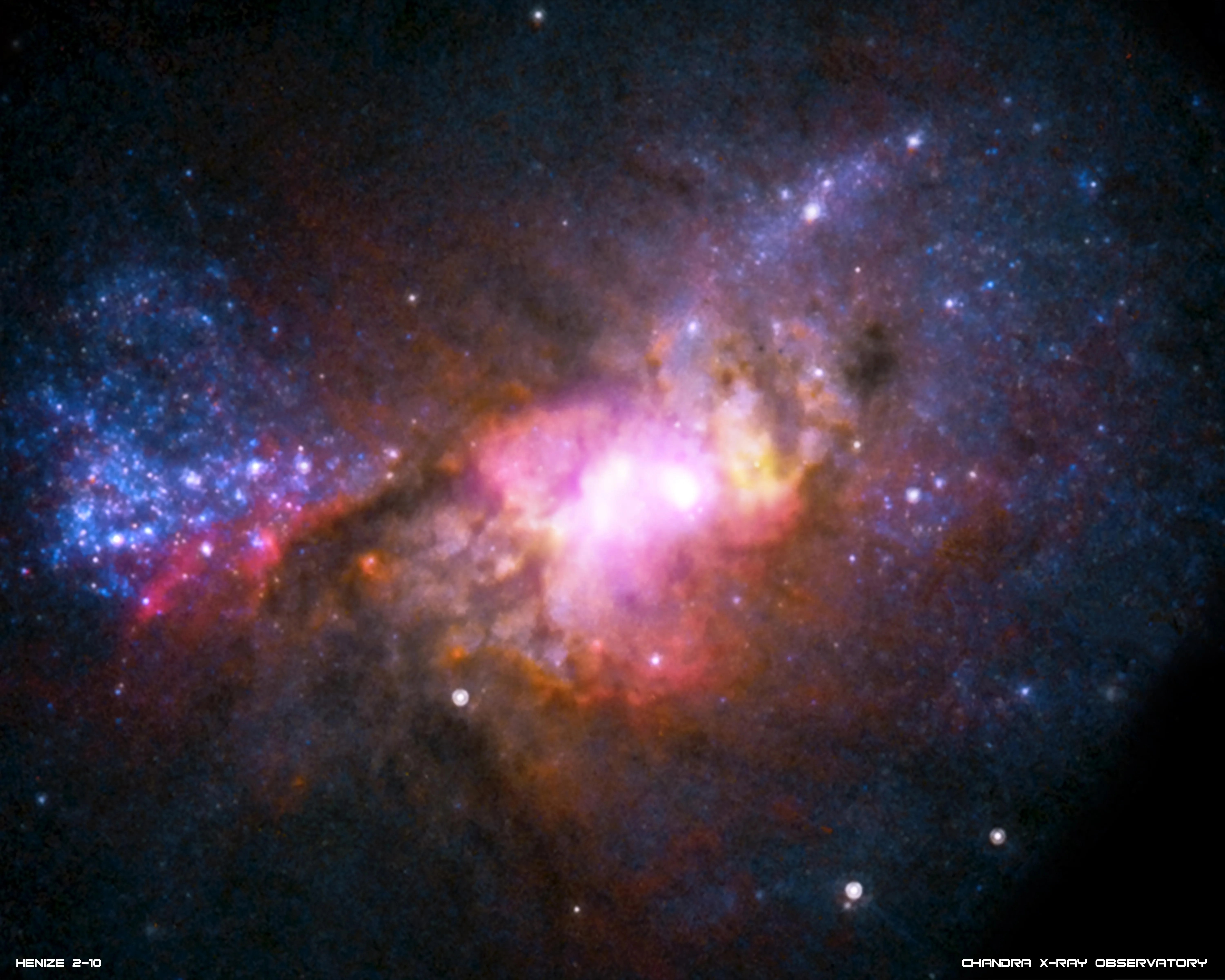
Galaxies are enormous systems containing stars, gas, dust, dark matter, and other cosmic components held together primarily by gravity. They vary considerably in size, shape, and structure. Some galaxies are spiral-shaped, others are elliptical, and some have irregular forms. Each galaxy provides scientists with valuable information about how stars develop, how matter is distributed, and how cosmic structures change over billions of years.
The Milky Way is the galaxy in which our solar system exists. It contains hundreds of billions of stars, along with gas, dust, and other material spread across an immense region. Our solar system lies in one of its spiral arms, far from the galactic center. Beyond the Milky Way, telescopes have revealed enormous numbers of other galaxies throughout the observable universe. By studying their distances, movements, and compositions, astronomers can investigate the history of cosmic evolution and the processes that shaped the universe into its present form.
Stars and Their Life Cycles
Stars are among the most important objects in the universe because they produce light and heat through nuclear fusion. In many stars, hydrogen nuclei combine to form helium, releasing enormous amounts of energy. This energy travels outward and eventually escapes into space as radiation. The Sun is the closest star to Earth and provides the energy necessary for most life and weather systems on our planet.
Stars form when dense regions of gas and dust collapse under gravity. As the material becomes hotter and denser, nuclear fusion can begin. A star’s future depends largely on its initial mass. Some stars gradually expand into red giants before ending their lives as white dwarfs. More massive stars can undergo powerful supernova explosions, leaving behind neutron stars or black holes. These processes distribute important elements into space, helping supply the material needed to form future generations of stars, planets, and potentially life-supporting environments.
Planets and the Search for Life
Planets are celestial objects that orbit stars or exist independently in space. Our solar system contains eight recognized planets, each with distinct characteristics. Mercury is closest to the Sun, while Neptune occupies the outer planetary region. Earth is currently the only world known to support life, offering liquid water on its surface, a protective atmosphere, and suitable environmental conditions for a wide variety of organisms.
Astronomers have also discovered thousands of planets orbiting stars beyond our solar system. These worlds, called exoplanets, vary widely in size, temperature, composition, and orbital behavior. Some orbit close to their stars, while others travel along distant paths. Scientists investigate whether certain planets possess conditions that could support life, examining factors such as atmospheric composition, temperature, and the possible presence of liquid water. Although no extraterrestrial life has been confirmed, the discovery of so many planetary systems has expanded scientific interest in whether life might exist elsewhere in the universe.
Black Holes and the Mysteries of Gravity
Black holes are regions of space where gravity is so strong that nothing can escape from within their event horizons, including light. Many black holes form when massive stars collapse at the end of their lives. Others, known as supermassive black holes, contain millions or billions of times the Sun’s mass and are found at the centers of many large galaxies.
Despite their name, black holes are not simply empty holes in space. They are regions containing matter and energy compressed into an extremely compact state. Scientists cannot observe their interiors directly, but they can investigate their effects on surrounding matter, light, and nearby stars. Material falling toward a black hole can become extremely hot and emit detectable radiation. Observations of stellar motion, gravitational waves, and black-hole shadows have helped researchers test theories of gravity and explore some of the most extreme environments known to science.
Dark Matter and Dark Energy
Much of the universe remains difficult to explain because its composition differs from the ordinary matter we can directly observe. Stars, planets, gas, and people are made from ordinary matter, but astronomical evidence suggests that this material accounts for only a small fraction of the universe’s total mass-energy content. Scientists use the terms dark matter and dark energy to describe two major components that have different effects on cosmic evolution.
Dark matter does not emit or absorb light in the ordinary ways that visible matter does, but its gravitational influence can be detected through the movement of galaxies and the bending of light. Dark energy is the name given to whatever is driving the observed accelerated expansion of the universe within the standard cosmological model. Its underlying nature remains unknown. Researchers are developing new instruments and theories to investigate these mysteries. Understanding these components could fundamentally change our knowledge of the universe and the physical laws governing its development.
How Scientists Explore the Cosmos
Modern astronomy uses a wide range of technologies to investigate objects that are often billions of light-years away. Ground-based telescopes collect visible light and other forms of radiation, while space telescopes avoid many atmospheric limitations. Instruments designed to detect radio waves, infrared radiation, ultraviolet light, X-rays, and gamma rays reveal different aspects of astronomical objects that cannot be fully understood through visible light alone.
Spacecraft and robotic missions provide another important method of exploration. Probes have visited planets, studied moons, examined asteroids, and investigated the Sun. Robotic rovers have explored the surfaces of Mars, collecting information about its geology and ancient environmental conditions. Meanwhile, gravitational-wave observatories detect ripples in spacetime produced by events such as black-hole mergers. By combining these different methods, scientists develop a more complete picture of cosmic history, test scientific theories, and identify new questions for future investigations.
Why Studying the Universe Matters
Research into the universe is valuable because it expands our understanding of nature and our place within it. Astronomy has helped scientists understand gravity, nuclear physics, planetary formation, and the behavior of matter under extreme conditions. These investigations often lead to improvements in imaging, computing, sensor technology, and data analysis. Techniques developed for scientific research can also contribute to applications in medicine, communications, environmental monitoring, and other fields.
Exploring space also encourages international cooperation and long-term scientific planning. Large astronomical projects often involve researchers from many countries who share data, develop instruments, and work toward common goals. In addition, studying other planets helps scientists understand Earth’s climate, geological history, and potential environmental changes. Learning about the vastness of space can inspire curiosity and encourage younger generations to pursue science, engineering, mathematics, and technology. The value of astronomical research therefore extends beyond distant objects, influencing education, innovation, and humanity’s understanding of its own future.
The Future of Cosmic Exploration
The future of astronomy promises more detailed observations and new discoveries. Next-generation telescopes, improved space observatories, and advanced computer simulations will help scientists study distant galaxies, investigate exoplanet atmospheres, and examine the earliest stages of cosmic history. Researchers hope to learn more about the formation of the first stars, the evolution of galaxies, and the mysterious forces associated with the expansion of the universe.
Future space missions may also provide a better understanding of potentially habitable environments beyond Earth. Scientists are interested in places such as Mars, Europa, and Enceladus because evidence suggests that some of these worlds may have conditions relevant to the search for life. However, exploration must be guided by careful research, planetary protection, and responsible use of resources. Even with increasingly advanced technology, many questions will require decades of observation and analysis. Each new discovery is likely to create additional questions, making cosmic exploration an ongoing scientific journey.
Conclusion
The universe represents one of the greatest subjects of human curiosity, combining extraordinary beauty with profound scientific mysteries. From the birth and evolution of galaxies to the life cycles of stars, the diversity of planets, and the extreme environments surrounding black holes, every discovery contributes to a broader understanding of existence. Modern astronomy has transformed our knowledge of space, yet important questions about dark matter, dark energy, extraterrestrial life, and the earliest moments of cosmic history remain unresolved.
Studying the cosmos helps us understand the physical laws that shape the universe and recognize Earth’s position within a much larger environment. Continued investment in scientific research, advanced technology, and international cooperation will allow future generations to explore questions that are difficult to answer today. Although the universe is vast and many of its secrets remain hidden, the human desire to investigate, learn, and discover continues to move science forward. Every observation brings us another step closer to understanding the remarkable universe in which we live.

